LGDWT-GS
Local and Global Discrete Wavelet-Regularized 3D Gaussian Splatting
for Sparse-View Scene Reconstruction
Qualitative Comparison
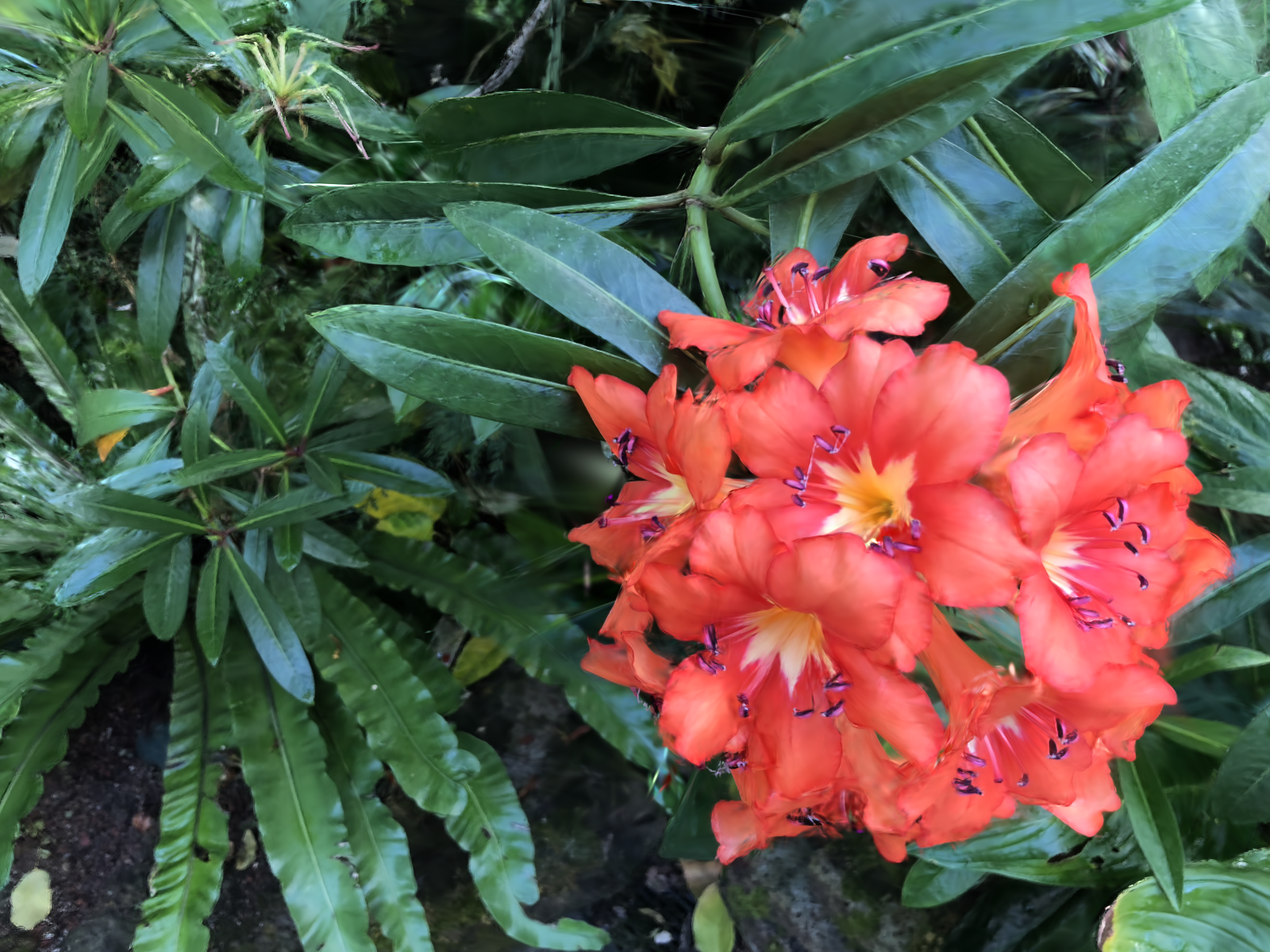
Results on MipNeRF360 and LLFF datasets. Side-by-side comparison of LGDWT-GS (ours) vs 3DGS demonstrating improved detail preservation and sharper reconstructions with our method.
Bicycle / MipNeRF360


Flower / LLFF

Abstract & Method
We propose a new method for few-shot 3D reconstruction that integrates global and local frequency regularization to stabilize geometry and preserve fine details under sparse-view conditions, addressing a key limitation of existing 3D Gaussian Splatting (3DGS) models. We also introduce a new multispectral greenhouse dataset containing four spectral bands captured from diverse plant species under controlled conditions. Alongside the dataset, we release an open-source benchmarking package that defines standardized few-shot reconstruction protocols for evaluating 3DGS-based methods. Experiments on our multispectral dataset, as well as standard benchmarks, demonstrate that the proposed method achieves sharper, more stable, and spectrally consistent reconstructions than existing baselines.

Package
We release an open-source benchmarking package that defines standardized few-shot reconstruction protocols for evaluating 3DGS-based methods. The package provides comprehensive evaluation tools and metrics for sparse-view 3D reconstruction tasks.

Multispectral Greenhouse Dataset
We introduce a new multispectral greenhouse dataset containing four spectral bands. The dataset includes multiple plant species (sorghum, tomato, alocasia, cotton, grape) captured under controlled greenhouse conditions.
580 nm (Green)

660 nm (Red)

735 nm (Red Edge)

820 nm (NIR)

Pseudo RGB

Alocasia
580 nm (Green)
660 nm (Red)
735 nm (Red Edge)
820 nm (NIR)
Cotton
580 nm (Green)
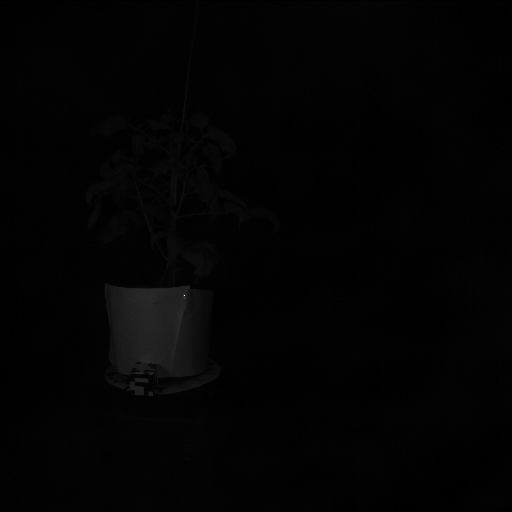
660 nm (Red)

735 nm (Red Edge)

820 nm (NIR)
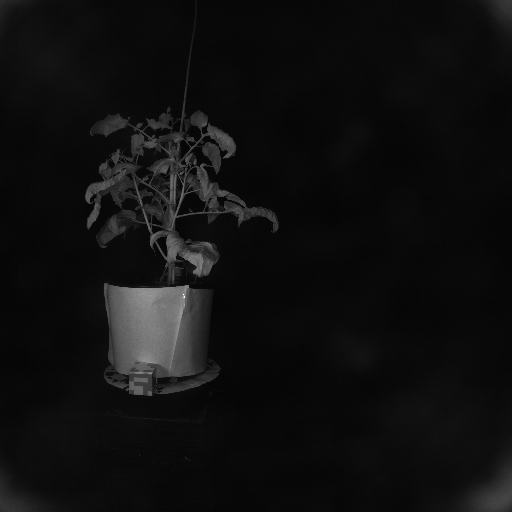
Grape
580 nm (Green)
.png)
660 nm (Red)
.png)
735 nm (Red Edge)
.png)
820 nm (NIR)
.png)
Tomato
580 nm (Green)
.png)
660 nm (Red)
.png)
735 nm (Red Edge)
.png)
820 nm (NIR)
.png)
Sorghum
580 nm (Green)

660 nm (Red)

735 nm (Red Edge)

820 nm (NIR)

Citation
@article{salehi2024lgdwtgs,
  title={LGDWT-GS: Local and Global Discrete Wavelet-Regularized 3D Gaussian Splatting for Sparse-View Scene Reconstruction},
  author={Salehi, Shima and Agashe, Atharva and McFarland, Andrew J. and Peeples, Joshua},
  journal={arXiv preprint arXiv:2601.17185},
  year={2026}
}
Acknowledgments
This material is based upon work supported by the Texas A&M University System National Laboratories Research Seed Funding Program. Any opinions, findings, and conclusions or recommendations expressed in this material are those of the author(s) and do not necessarily reflect the views of the Los Alamos National Laboratory or The Texas A&M University System. Portions of this research were conducted with the advanced computing resources provided by Texas A&M High Performance Research Computing.